I have always wanted a PC engine in my collection but for a while, I settled with the PC Engine mini console to get my PC engine fix. Well, now I have the real thing finally. I went for the PC engine DUO which is a Japanese version of the PC engine with the CD-ROM attachment built into it so it can play games from both CD and the HuCard slot.
Games for the CD part of this console can just be burnt to CD as they had no copy protection and were also region free. I have also ordered an SD-Card solution for the HuCard side of things so will see how well that works when it arrives.
For an 8-bit console, the PC Engine certainly does a good job in the graphics department, many of the games have a very much 16bit feel to them. Will be fun going through the library to see what is out there.
Rather than a new console, this update is for a new accessory. The Gameboy player, as it suggests, allows you to play Gameboy/Color/Advance games on the Gamecube.
I picked this up from eBay for a reasonable price as it was the unit only without the required disc. But since my Gamecube is modded I can run the GBI software instead which is a community version of the player software and is apparently better in every way anyway.
The unit sits underneath the Gamecube and utilises the ports on the bottom of the Gamecube. A very nice subtle upgrade.
Now when the batteries run out on my Gameboy Advance, I have the option of switching to the big screen and continuing my game from where I left off. The picture quality is also pretty good coming through the OSSC and into the plasma TV in the bedroom.
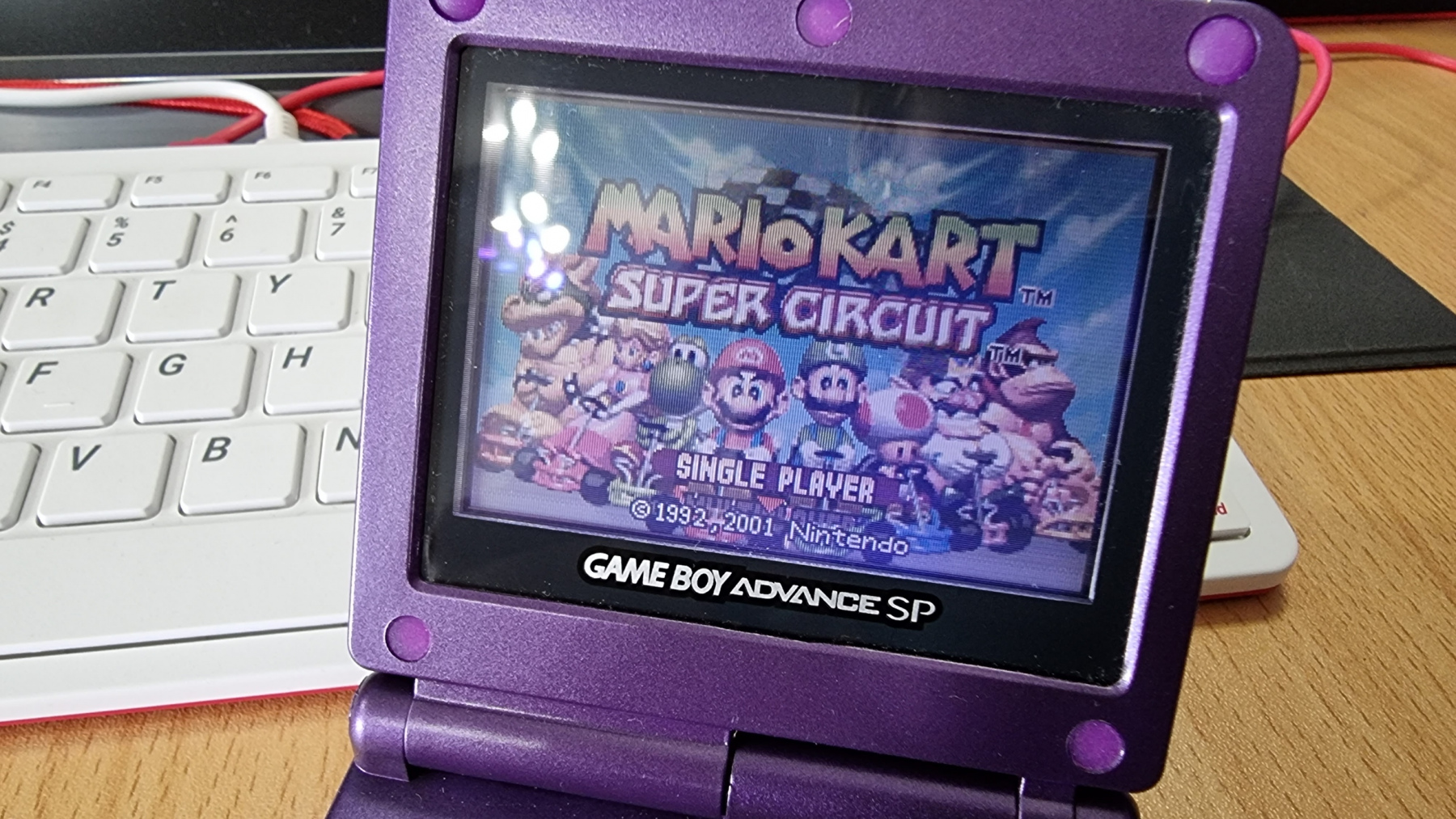
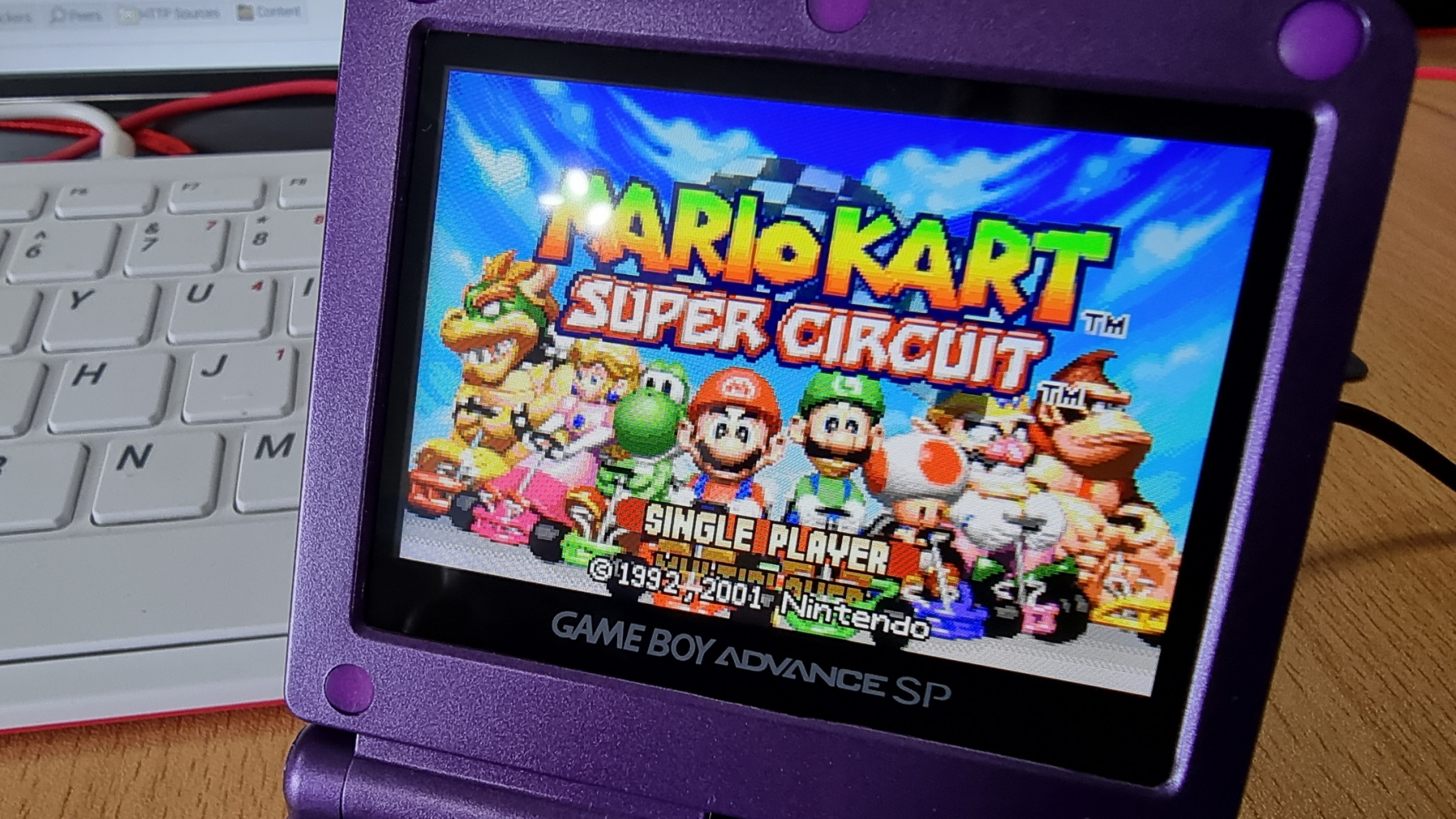
After fitting a new case to my £4 car boot find GBP SP, it was looking as good as new. But the screen on these things isn’t exactly the best. They are front-lit LCD screens and as such, they are not very vibrant. Since this GBA SP was never going to be kept as an original example of the console, I decided to treat it to a modern LCD replacement.
Click the images below to see a close up of the picture quality.
This screen was £31 from China and I think the results speak for themselves. It looks gorgeous now and has become a very useable device.
Fitting was very easy and no soldering is actually required, but you can solder a single wire to have the brightness control working. I also had to do some minor modifications to the insides of the case to allow the top part of the shell to close together. But even with that, the fitting took no longer than 30 minutes.
I have recently taken delivery of two more Atari machines. The first was a Facebook marketplace sale where the guy only had the computer itself with no accessories and therefore priced it accordingly at £65. The machine in question is an Atari 1040STe. These normally sell on eBay for 100+ and it saves me having to worry about upgrading my 520STFM to get some of the more resource-hungry applications to run.
I gave it a good clean when it turned up and have replaced the floppy drive with a Gotek to make loading of software easier.
The second computer is something I hadn’t even come across before. It was launched around the same time as the ST and continued Atari’s 8 bit line of computers. This is the Atari 65XE and as you can see from the photo below it got it’s styling from it’s bigger brother. I have purchased an “S-Drive” for this computer which is a really smart looking SD Card solution for the XE. Will be interesting to check out this machines software library to see ow it compares to other 8 bit machines of the era.
So I was having an evening messing around with the CD32 and installed an ESP8266 unit inside it so it would connect to my Wi-Fi. I had everything all configured and was just about to start testing when my screen went white. I powered off the CD32 and powered it back on, only to get a blank screen, no sign of booting and the CD drive was not spinning up either. I was not very happy!
Anyway, I made my way to google and had a search around and came across a page that was talking about a voltage detection circuit on the CD32. This circuit made sure that 5V was present on the board and if it wasn’t it would halt the startup of the machine. This seemed to be a possible candidate for my issue so that was where I started.
Firstly I checked that the power supply was supplying the 5V which it was. I then checked various locations on the board where 5v should be present and they all checked out too. So it was now time to concentrate on the reset circuit.
I grabbed the schematic for the CD32 and found the circuit diagram for this part of the machine:
According to the article I read, U14 could sometimes be faulty and could cause this issue. But to test this I measured the voltage that was entering U14 on pin 2. This should measure ~5V but instead was measuring 3.7V, because of this, pin 3 was LOW, and therefore the machine would not boot. To test this out I grabbed a jumper wire and connected a known 5V source up to pin 2, immediately the green light went bright and the CD32 booted. So now I knew the issue, but what was the problem? There are only a couple of components before U14 that could affect the voltage, a 10k resistor, and a 0.47uF capacitor. I have seen many electrolytic capacitors fail before but this one was a small surface-mount capacitor. It still seemed like a likely candidate though so it got swapped out.
And after re-assembling enough to test the machine, sure enough, it fired back into life. I was so happy that I managed to recover the machine as I’ve really enjoyed messing around with it. Now back to connecting this Amiga up to the internet at a staggering 115200baud 🙂
I recently connected the Atari 2600 up to a spare small LCD TV I had kicking around, but this TV really was garbage picture quality. You had to look at it straight on otherwise the colours would go inverted. Needless to say, that is now going to the great recycling centre in the sky.
But I did like the idea of having the Atari 2600 on its own TV screen and with a bit of juggling around, there is probably room for another console in the same area. So this meant I needed a good TV to take its place.
Luckily I knew exactly what I wanted as I already have one in a different room with the MSX hooked up to it. The Sony Bravia KDL-15G2000 15″ LCD TV.
The picture quality is really good on it, the TV is nice and compact, and it has SCART, Component, composite and VGA inputs on it.
Next step will be to wall mount it so it sits a bit further back, then I can lower the shelf it currently sits on and maybe move the GX4000 here to free up an RGB Scart port in the lounge for something different.
The Wii mini was an odd choice by Nintendo. Designed to be a cheaper version of the Wii, but lacked Gamecube game support, WiFi, 480p video output and the SD Card slot. It seemed to be the console that nobody had asked for. I’m pretty sure by the time it launched, everyone and their granny already owned a Wii anyway.
It did however have quite a stylish look to it and the Wiimotes included the Wii motion plus functionality. But the main reason I never looked at it again was that it was classed as “un-hackable”
Without internet access or the SD card slot, non of the known exploits would work on this unit. But recently I saw an article saying it had been hacked. It turns out it was actually hacked way back in 2020 but it seemed to go pretty much unnoticed.
Anyway, since the option was there now to mod it and loads games from a USB stick, I thought it would be rude to not have one in my collection. I have added it to the Nintendo shelf in the bedroom so I can have some late-night Mario Kart action 😁.
I needed a method of easily loading games for the ZX81 and buying original cassettes wasn’t really on the cards. Normally I look for some sort of native SD Card solution and even though one exists for the ZX81 (ZXpand), it wasn’t easily available to purchase and was probably a bit overkill for my needs.
So instead I went for a slightly different method, and although it is still SD card based, this unit actually reads TZX files from the SD card and then plays them back as sound files out the headphone jack.
The obvious disadvantage is games load at the same speed as they did from tape. But the advantage is this unit is compatible with many of the older computers that used tape as their medium.
It’s actually a really nice little device and since the games for the ZX81 were quite small anyway, they don’t actually take that long to load. 1K Chess for example took about 30 seconds (An entire Chess game fitted within 1K of memory, crazy!)
I purchased this unit from eBay for £24, but you can find them in various different shapes and sizes. I’ve even seen a project where someone built one into an empty cassette tape.